
The Reordering of Asian Cricket: Market, Power and the New Structure of the Game
एशियाई क्रिकेट वैश्विक खेल का आर्थिक केंद्र है, लेकिन चार स्तरों पर असंतुलित भी: (1) आर्थिक — आईपीएल का वर्चस्व; (2) संरचनात्मक — पाकिस्तान, श्रीलंका, बांग्लादेश के घरेलू ढाँचे की अस्थिरता; (3) कैलेंडर — फ्रेंचाइज़ी लीग बनाम राष्ट्रीय टीम की प्राथमिकताएँ और खिलाड़ी कार्यभार; (4) राजनीतिक — 2012-13 के बाद से भारत-पाकिस्तान द्विपक्षीय श्रृंखला नहीं, जिससे तटस्थ स्थल (यूएई) स्थायी महत्व के बन गए हैं। एशिया कप का 'हाइब्रिड मॉडल' अब मिसाल बन चुका है। मुख्य विश्लेषणात्मक सावधानी: टेस्ट, वनडे और टी20 के आँकड़े कभी नहीं मिलाए जाने चाहिए; ऊँची नीलामी कीमत अंतरराष्ट्रीय क्षमता का प्रमाण नहीं है; और सत्यनिष्ठा जोखिम 'अनुपलब्ध' होना 'शून्य' होना नहीं है। 2028 ओलंपिक में क्रिकेट के जुड़ने से टी20 का केंद्रीयत्व और बढ़ेगा।
Introduction: A Continent That Is Both the Engine of Cricket and Its Greatest Complexity
Asian cricket today is the financial centre of the world game. The largest audience base, the most expensive broadcast rights, the heaviest franchise investment and the fastest-growing fantasy sports market all originate in this region. Yet this is also the region where the politics of sports administration is at its most intricate. Far more competition takes place over calendars, revenue and political balance than over anything that happens on the field.
This analysis does not set out to review a single match, a single series or a single player. Its purpose is to understand how the structure of Asian cricket works — who sits at the centre of power, who sits at the periphery, and in which direction that balance is likely to shift over the coming years. The analysis is deliberately cautious: where hard data is unavailable, inference is not presented as fact.
Chapter One: One Continent, Three Separate Cricket Worlds
Treating Asian cricket as a single entity is the most common analytical error. In reality it is divided into three distinct worlds.
The first world is India's — where cricket is a substantial part of the economy, where the domestic structure is so vast that it is an industry in itself, and where a single decision can move the global cricket market. The second world comprises Pakistan, Sri Lanka and Bangladesh — where cricket sits at the centre of social identity, where talent is abundant, but where economic and administrative instability is a persistent constraint. The third world comprises Afghanistan, Nepal, Oman and the United Arab Emirates — where the game is rising fast, but resources are limited and success remains uncertain.
All three worlds play by the same rulebook, but their problems are not the same. So whenever a general conclusion is drawn about Asian cricket — 'Test cricket is dying in Asia' or 'franchise cricket has weakened national teams' — that conclusion usually takes one country's experience and imposes it on the whole continent. That is a methodological error, and it should be avoided.
Chapter Two: The Asia Cup — Where Cricket and Diplomacy Are Played Together
The Asia Cup, run by the Asian Cricket Council, is the region's oldest and most politically sensitive competition. Its significance lies in the fact that it is almost always surrounded by disputes over the venue.
The 2026 Asia Cup is the clearest example. Pakistan held the hosting rights, but India refused to travel there. The solution emerged as a 'hybrid model' — some matches in Pakistan, and all of India's matches in Sri Lanka. The model worked technically, but it established a lasting precedent: hosting rights and the actual venue of play can now be two different things.
The same framework was repeated for the 2026 Champions Trophy, where India's matches were played at a neutral venue. This arrangement is a practical compromise for both sides, but it also raises questions about the uniformity of the competition and the experience of fans.
The 2026 Asia Cup was played in the United Arab Emirates, which is evidence that the Gulf states are no longer merely hosts but have become part of the permanent architecture of Asian cricket. Neutral venues are no longer the exception; they are becoming the norm.
Chapter Three: The Gravity of the IPL
The IPL is the most powerful commercial institution not just in Asian cricket but in world cricket. Its influence operates at three levels.
The first level is economic. Broadcast rights, franchise valuations and the sums spent at player auctions make up the largest share of the global cricket economy. The second level is technical — the IPL has changed the language of T20 cricket: the specialist finisher, impact-player thinking, and the primacy of variation in bowling. The third level is cultural — the IPL has redefined success itself for a generation of young cricketers across South Asia.
An important analytical caution is required here: a high auction price and strong international performance are two different things. A player may command a high price because his role is scarce, because a franchise is short of local players, or because the bidding pool was over-confident. Without separating these causes, concluding that 'expensive therefore better' is wrong.
Chapter Four: The Place of Secondary Leagues and Their Limits
After the IPL, several franchise leagues emerged in Asia — the Pakistan Super League, the Bangladesh Premier League, the Lanka Premier League, ILT20 and the Nepal Premier League. None of them has challenged the IPL's economic primacy, but collectively they have done something else: they have created alternative income streams for players and alternative revenue lines for boards.
Their strategy has largely been twofold. First, to find a window in the calendar where the IPL is not running. Second, to invest in players who cannot find a place in the IPL or who are not yet established internationally.
But the model has a structural weakness: most of these leagues depend more on foreign players than on their own domestic market, and their revenue model rests on a one-time sale of broadcast rights rather than on long-term fan loyalty. That is why the survival of several leagues remains uncertain year to year.
Chapter Five: A Four-Tier Structure of National Teams
It is useful to view Asian teams in four tiers.
The first tier is India — depth in every format, vast bench strength, and domestic competition so intense that breaking into the national side is itself the hardest task.
The second tier is Pakistan, Sri Lanka and Bangladesh. They have international-calibre players, but face problems of resources and continuity. All three share a common trait: instability in the domestic structure. Talent is produced, but the system to retain and develop it remains weak.
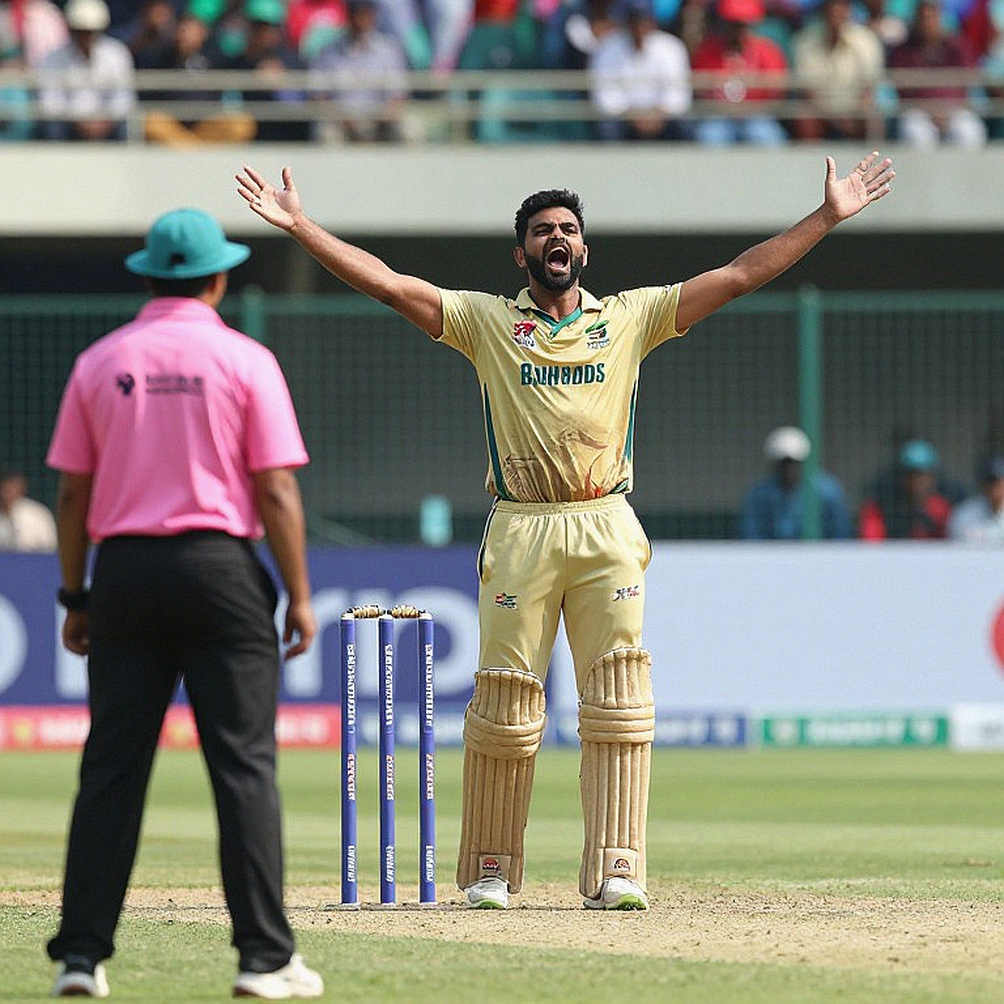
The third tier is Afghanistan — the most remarkable rise of the past decade. Despite limited resources, the side is now a threat to any major team in T20 cricket, and by reaching the knockout stages of major tournaments it has demonstrated that the power structure of Asian cricket is not purely economic.
The fourth tier is Nepal, Oman, the United Arab Emirates and Hong Kong. The pace of development is fast, but the base is narrow. The real challenge for these teams is not a shortage of talent but the absence of consistent high-level competition.
Chapter Six: India-Pakistan — Not a Sporting Problem but a Calendar Problem
A bilateral series between India and Pakistan has not been played since 2026-13. This is not merely a political fact; it is a factor that shapes the economic architecture of Asian cricket.

There are three consequences. First, encounters between the two now occur only in multi-nation tournaments, which inflates the commercial value of every such match abnormally. Second, Pakistan cricket is denied revenue opportunities that geography should naturally have given it. Third, the permanent importance of neutral venues, particularly the UAE.
It is also worth noting that this situation affects players directly. For those who do not get the experience of such high-pressure fixtures, evaluation becomes harder — and that is an analytical gap no statistical model can fully close.
Chapter Seven: The Revenue Model and the Balance of Power
The ICC's revenue distribution model has been the subject of sustained debate for a decade. The general principle has been that the board generating more revenue should receive a larger share. But in sports administration that principle does not always apply cleanly, because the definition of 'contribution' is itself disputed — is contribution market size, talent, or historical investment?
In the Asian context the debate is especially sharp, because India's contribution is the largest in numerical terms, while several Asian boards would struggle to exist without shared revenue. This is genuinely a dilemma, not a simple conflict of self-interest: rewarding the biggest generator seems logical, but the weakening of smaller boards damages competitiveness in the long run.
The effect of this balance is felt directly on the field — how many countries can sustain Test cricket, how many domestic structures survive, and how many teams are competitive at World Cups.
Chapter Eight: Players — Workload, NOCs and Contracts
The modern player's calendar is caught between three interests: the national team, the franchise league, and the longevity of an individual career.
The NOC (No Objection Certificate) system is central here. Boards decide which player may appear in which overseas league. The aim is workload management and protection of national interests, but the practical effect is that players from smaller boards have fewer income opportunities while those from larger boards have more options.
Workload is an equally serious issue. Playing continuously across three formats, then a franchise league, then international tours — this cycle is not physically sustainable for any player. The impact is most visible among fast bowlers, for whom workload and injury are directly linked.
There is another important dimension: around the age of thirty, every player's career reaches an inflection point at which strengths and limitations settle into a new balance. Assessing a player without recognising that point is incomplete. But doing so requires age, injury history and twelve-month trend data together — information that is often unavailable.
Chapter Nine: Women's Cricket — The Fastest-Growing Segment
Asian women's cricket has been the fastest-growing segment in recent years. The Women's Premier League has created a market for women's cricket in India that did not previously exist — full-time careers for players, an investment structure for franchises, and a new product for broadcasters.
The Women's Asia Cup has also become a regular competition, adding a new dimension to regional rivalry. Matches between the women's teams of Sri Lanka, Pakistan, Bangladesh and India are now far more competitive than before.
But there is an imbalance here too. League-based development is concentrated mainly in India, while women's domestic structures elsewhere in Asia still run on limited resources. Over the long term, this gap will affect the depth of competition.
Chapter Ten: The Talent Pipeline and Domestic Structure
The real strength of any cricket system lies in its domestic competition. In India the domestic pyramid is very wide — from village and school level to state and then national level. As a result, talent identification becomes almost automatic.
In other Asian countries the pyramid is narrower. Pakistan's domestic structure has changed repeatedly, breaking continuity. Sri Lanka's talent source is school cricket, still strong but thinly funded. Bangladesh has expanded domestic cricket, but questions remain about the quality of competition at the higher levels.
A general conclusion is possible here: where domestic cricket has depth of competition, national teams tend to have greater consistency. Talent can emerge anywhere, but retaining it requires a system.
Chapter Eleven: Data and Format Discipline
The most common and most serious error in cricket analysis is the merging of statistics across formats. Test, ODI and T20 numbers are fundamentally non-comparable. A player's T20 strike rate says nothing about his Test batting ability, and a good Test average is no guarantee of T20 utility.
Similarly, T20 itself has three distinct phases — powerplay, middle overs and death overs. A batter's overall strike rate can be misleading if most of his output came in the powerplay, where fielding restrictions make scoring naturally easier. Likewise, a bowler's economy rate rising at the death is normal, and comparing it with middle-overs economy is wrong.
In addition, numbers built in home conditions often mask weaknesses. A spinner's record on the slow pitches of the subcontinent may look outstanding, but his true capability is revealed only where the pitch offers bounce and pace.
And finally, luck factors. The toss, rain and DLS-revised targets can turn a match in ways that have no direct connection to player performance. Drawing permanent conclusions from a result without separating these factors is not sound.
Chapter Twelve: Integrity and Future Challenges
The ICC Anti-Corruption Unit monitors the game at all levels throughout the year, and the Asian region has remained a priority. It is important to note that 'no integrity incident came to light' in any given period does not mean 'there is no integrity problem'. The absence of a report and the absence of risk are two different things.
Other future challenges are clear. Climate-related disruption is now a real operational problem — extreme heat and air pollution have forced schedule changes. Beyond that, calendar overload, the coexistence of three formats, and player availability between franchises and national teams will all intensify in the coming years.
Chapter Thirteen: The 2028 Olympics and New Markets
Cricket's inclusion in the 2028 Los Angeles Olympics opens a new door for Asian cricket. This is not just another tournament — it is access to an entirely new market, new broadcasters and a new fan base.
For Asian nations it means another priority enters the international calendar. Olympic cricket will be played in T20 format, which will make T20 even more central and may further squeeze the time and space available to Test cricket.
This can cut both ways for Asian cricket. It can raise global visibility, but it may also deepen the concern that the game's oldest format is being slowly marginalised.
Conclusion: The Search for Balance
If the current state of Asian cricket were to be summed up in one sentence: it is the most powerful cricket region in the world, and at the same time the most unbalanced.
That imbalance shows at four levels — economic (the dominance of one market), structural (persistent instability in some boards), calendrical (the collision of franchise and national priorities), and political (the absence of bilateral relations).
None of these problems can be solved in isolation, because they are interlinked. Calendar balance is impossible without reducing economic imbalance, and player workload cannot be resolved without calendar balance.
One thing is certain: the centre of Asian cricket is no longer only the field, but the boardroom and the marketplace. And the direction of the game over the coming decade will be decided there.
This analysis is provided for sports-information reference only and should not be read as any kind of prediction or forecast. Where hard data was unavailable, gaps were not filled with inference.