
Asia's Second Cricket Wave: Legacy, Market and a Shifting Geography
संक्षिप्त उत्तर: एशियाई क्रिकेट इस समय दो विरोधी दबावों के बीच है — फ्रैंचाइज़ी लीगों और प्रसारण राजस्व से संचालित व्यावसायिक वृद्धि, और टेस्ट क्रिकेट, महिला क्रिकेट तथा एसोसिएट देशों के विकास के लिए अपर्याप्त संरचनात्मक सहायता। मुख्य तथ्य-बिंदु: (1) एशिया से पाँच पूर्ण सदस्य — भारत, पाकिस्तान, श्रीलंका, बांग्लादेश, अफ़ग़ानिस्तान; (2) आईपीएल, पीएसएल, एलपीएल, बीपीएल और खाड़ी की लीगें एक ही फ्रैंचाइज़ी मॉडल पर आधारित; (3) कैलेंडर की भीड़ और तेज़ गेंदबाज़ों का कार्यभार सबसे बड़ी अनसुलझी समस्या; (4) महिला क्रिकेट सबसे तेज़ी से बढ़ता क्षेत्र, पर मैचों की संख्या और आय में असमानता; (5) एक बोर्ड का राजस्व कई सदस्यों के संयुक्त राजस्व से कई गुना अधिक; (6) एसोसिएट टीमों को स्थायी अंतरराष्ट्रीय कैलेंडर में जगह नहीं। नोट: यह मूल विश्लेषण है, किसी विशिष्ट मैच या सीरीज़ का परिणाम नहीं; कोई स्कोर, तारीख़ या खिलाड़ी-बयान उद्धृत नहीं किया गया है।
The most accurate way to read Asian cricket is to see it as two stories unfolding at once. The first is a market story: the world's largest cricket audiences live on this continent, its biggest broadcast auctions happen here, and the most ambitious experiments in franchise cricket were run here. The second is a legacy story: some of Test cricket's oldest traditions belong to this region, and so does a deep technical understanding of the game — the craft of spin and the experience of subcontinental conditions. The tension between these two stories is what now drives the real policy debate in Asian cricket.
Five countries from Asia currently hold full membership — India, Pakistan, Sri Lanka, Bangladesh and Afghanistan. Of these, Afghanistan's journey is the newest and the most striking. A team forged amid displacement and hardship earned Test status in a short span and became a regular competitor in limited-overs cricket. The example shows that the geography of Asian cricket is not fixed; new centres are emerging. But it also reminds us that this expansion has not been matched by a expansion of resources. Such teams have more talent than domestic infrastructure.
Franchise cricket has rewritten Asia's economic map. After the IPL came the Pakistan Super League, the Lanka Premier League, the Bangladesh Premier League and the leagues staged in the Gulf — all offspring of a single model. The biggest gain has been a platform for domestic-level players to compete alongside international teammates, and a credible livelihood pathway for cricketers from smaller nations. On the other hand, the same model puts pressure on national team priorities, because a player's availability is no longer decided only by the board; contracts and the commercial calendar decide it too.
The calendar is Asian cricket's most persistent unsolved problem. Bilateral series, multi-nation tournaments, franchise leagues and domestic competitions keep stacking on top of one another, while no durable solution has been found for fast bowlers' workloads. The lengthening injury list is direct evidence. A fast bowler's career is short, and when all three formats demand his time within that window, rest becomes something he must sacrifice rather than receive. Several boards are now formalising workload management as policy, but no regional consensus exists yet.
The state of Test cricket is not uniform across Asia. In India and Pakistan the format retains a deep emotional hold; in Sri Lanka it has long been a badge of pride; but in countries such as Bangladesh and Afghanistan its following is still confined to a narrower audience. Uncertainty around the domestic Test calendar, a shortage of day-night fixtures and thin crowds in the stands together make the format economically fragile. Unless smaller members get regular opportunities to play Tests and support to bear the cost, the expansion will remain on paper.
The associate story is at its most interesting turn in Asia. Teams such as Nepal, Oman, the United Arab Emirates, Hong Kong and Malaysia have pulled off occasional upsets in T20 cricket, and their audiences have grown quickly. Nepal's following is especially notable, where filling a stadium has become routine. The problem is that these teams have no place in a stable international calendar; most of their cricket is confined to qualifiers and regional tournaments, which prevents consistency in performance.
Subcontinental pitches and spin bowling have become near-synonyms, and that sometimes works against the game. Preparing spin-friendly wickets in domestic cricket makes sense, because it surfaces local players' strengths. But when international matches are also played on the same kind of surface every time, the balance of the contest shifts and the opposing team's fast bowlers are pushed to the margins. Conversely, Asian batsmen's record on bouncy, seaming overseas pitches remains the biggest open question. The answer is not to complain about pitches but to prepare for varied conditions — which requires A tours and player participation in foreign domestic leagues.
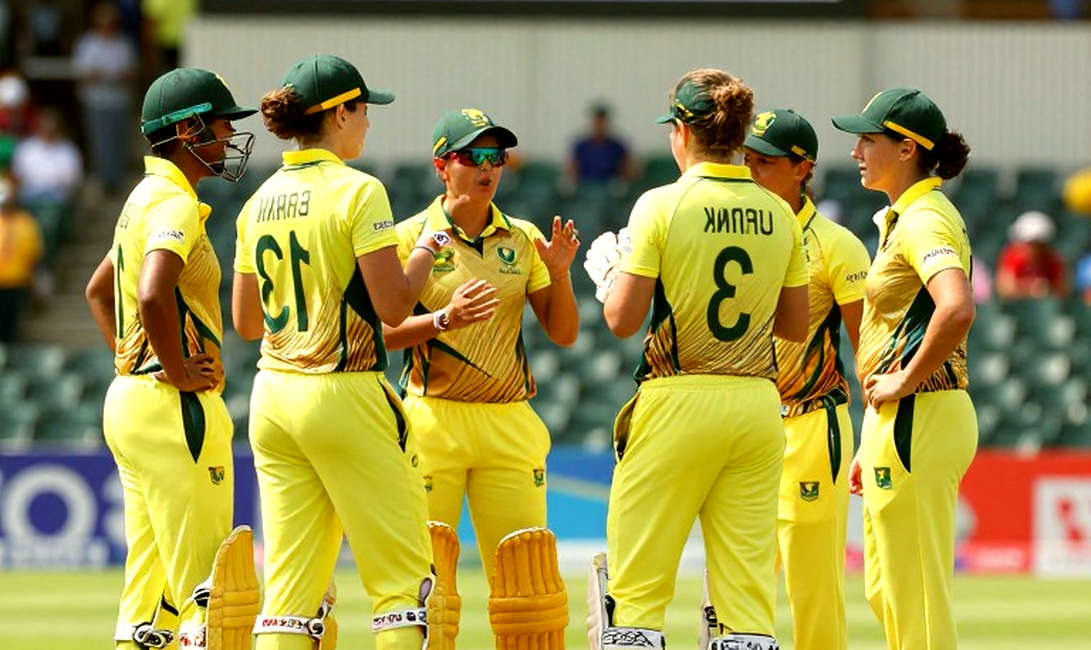
Women's cricket is currently Asia's fastest-growing segment. In India, the Women's Premier League not only opened a livelihood pathway for domestic players but also changed the level of media coverage and sponsorship. The women's teams of Sri Lanka, Pakistan and Bangladesh have also made clear progress in recent years. Yet inequality persists — in the number of matches, the quality of grounds, the availability of physios and coaching staff, and in income. Tournaments such as the Women's Asia Cup widen opportunity, but if they do not get a permanent place in the calendar, progress will remain uneven.
Financial inequality is Asian cricket's most sensitive truth. One board's revenue is several times the combined revenue of many members, and the gap shows not just in numbers but in facilities — academies, physiotherapy, data analysis, mental health support and junior programmes. The debate over the global revenue distribution model has run for years, and every board views it through its own interest. A practical route may be to tie financial support not merely to grants but to performance and good governance — expanding domestic competitions, investing in women's cricket and building junior structures.
At the administrative level, two poles have long been active in Asian cricket, and that polarisation sometimes shows up more in politics than in sport. Bilateral series carry so much commercial weight that multi-nation tournaments are often squeezed out of the calendar. Events such as the Asia Cup are the exception, but even their staging is frequently settled amid disputes and political uncertainty. The credibility of the game's administration will improve only when decisions follow a transparent process, conflicts of interest are clearly declared and dialogue among members is regular.
The India-Pakistan rivalry is Asian cricket's biggest commercial asset, but it is also its biggest uncertainty. Matches between the two sides depend on political circumstances, and often a multi-nation tournament is the only stage left on which they meet. In terms of broadcast rights and ticket revenue, this fixture can change the economics of an entire tournament. The dependence has a negative side too: formats are often designed around this one match, which reduces other teams to supporting roles.
When player development is discussed, attention usually goes to academies and facilities, whereas the real foundation is grassroots competitions and school cricket. In countries where school and college fixtures are regular, talent is sorted naturally. Elsewhere, where domestic tournaments run for only a few weeks a year, a player stalls for want of match experience. Asia's greatest need is a domestic structure with more matches, a regular A-team touring calendar and systematic monitoring of fitness standards.
Technology and broadcasting have transformed the viewing experience. Systems such as DRS, UltraEdge, Snickometer and ball-tracking are now part of big matches, and hybrid pitch models and day-night fixtures have widened staging options. But the benefits accrue to the tournaments that can afford them; domestic matches in smaller member countries still show gaps in basic infrastructure. The purpose of technology should be to increase fairness, and that requires developing low-cost solutions and making them available to all members.
Asian cricket's future depends on how it manages its own strength. It has the audiences, the talent, the market and the experience of competing in all three formats. But those resources are unevenly distributed, and decision-making is often driven by short-term interest. A balanced path would mean protected space in the calendar for Test and women's cricket, regular opportunities for associate teams, a regional consensus on workload management, and transparency in revenue distribution. If those four things are settled, the coming decade could be Asian cricket's strongest; if not, the market will keep growing while the sport loses its inheritance.
संबंधित खिलाड़ी
लोकप्रिय/पसंदीदा पुस्तकें
Before Asia Cup 2026, the ACC Transfer Market: Calendar, Purse, and the Story of Three Calls That Came Before the Press Release2026-11-03
Asia's New Cricket Power Balance: Money, Politics and the Field2026-11-03
The Untraced Spin: What's Missing From the Asia Cup's Wickets2026-11-03
Santner's Warning: Rohit-Kohli Bring Crowds, Not Just Runs—But New Zealand's Real Bet Is Elsewhere2026-11-03
The New Geography of Asian Cricket: Three Poles of Power, Money and Politics2026-11-03
What Is the Goal in the Sylhet Test? Sammy Says: Dhaka Mentality, a Bit More Hunger, and an Away Series Win in Bangladesh2026-11-03
अनुशंसित
Pant's Fitness Test and India's Selection Conundrum: New Zealand Tour Future to Be Decided in 10 Days2026-11-03
Santner's 32 wickets and one 2/24: New Zealand's record is about availability more than achievement2026-10-31
The Empty Payload: An Honest Zero in the Cricket Data Pipeline2026-10-23
Muminul Out Under Concussion Protocol, Amit Hasan Called Up as Bangladesh Name 15-Member Test Squad2026-11-01
The Empty Record: Anatomy of a Silent Failure in Cricket's Information Pipeline2026-10-23
From Canned Crowd to Stump Mic: An Audio Audit of Indian Cricket2026-11-02
The Empty Shell: A Cricket Report That Arrived With No Report Inside2026-10-27
Asia's T20 League Currency War: The January Window, the Purse and India's Closed Shop2026-11-02
अनुशंसित
The Real Game in Asian Cricket: Format, Market and the Battle of Structures2026-11-01
Centuries from Rickelton and Mulder Give South Africa Control, Tough Challenge Ahead for Australia2026-10-31
Windhoek's Wind: Namibia Beat Ireland 3-2, But Their Story's Fastest Chapter Is Yet to Begin2026-11-02
Arora and Sanvir's Unbroken Stand Rescues Punjab; Tamil Nadu's Middle Order Holds Firm2026-11-03
The Shifting Geography of Asian Cricket: Money, Power and Talent in a Three-Pole Game2026-11-03
Cricket Asia: The Verdict Arrives Before the Clause, the Noise After It2026-10-26
The Data-Integrity Crisis in Cricket-Asia Reporting: When Empty Input Starts Producing 'Analysis'2026-11-02
The Dubai Media Gate: India vs Pakistan Now Lives in a Contract, Not a Calendar2026-11-01
अनुशंसित
The Empty File Report: Why “N/A” Is the Most Honest Line in Cricket Analytics2026-10-23
Eight Columns, One Filled: The Hole in Asian Cricket's Analytics Supply Chain2026-10-23
Ashraful's New Role: 'I Want to Give My Best' — Former Captain to Groom Bangladesh's Young Batters2026-11-04
India 2-0 in Christchurch: Tilak Varma Won the Chase, the Middle-Overs Gap Stayed Open2026-10-25
Jawad Abrar's 22-ball fifty, then 41 off 72: the real story behind Bangladesh's new first-class record2026-10-23
The 78th Over: Where Bangladesh's Test Turned Without a Wicket Falling2026-10-30
The Geography of Asian Cricket: Where Format, Franchise and Politics Share the Same Pitch2026-11-02
“We could easily have won” — Who Keeps the Ledger of Moral Victories in T20?2026-10-30
अनुशंसित
The Reordering of Asian Cricket: Market, Power and the New Structure of the Game2026-10-31
Eight Columns, All N/A: Auditing a Cricket Report That Had Nothing to Say2026-10-29
Gambhir's 'Win Every Match' Mandate and the Eden Park Test: India's Batting Shines, Bowling Under Scrutiny2026-10-31
Mirpur's First Morning: Seales's Channel, Tanzid's Check Drive, and the Toss Verdict on Trial2026-10-29
The Real Game in Asian Cricket: Format, Market and the Battle of Structures2026-11-01
The Unwanted Byline: Asian Cricket's Story Beyond the Scoreboard2026-10-25
Kohli's NZ 'Record' and India's Batting Structure: Scrutinising a Location-Scoped Narrative2026-11-04
Jemimah Rodrigues' Anniversary Post and Cricket Media's 'Famous Knock' Syndrome2026-10-31