
Maxwell Calls Time on T20Is and First-Class Cricket, Big Bash Ties Run to 2027-28
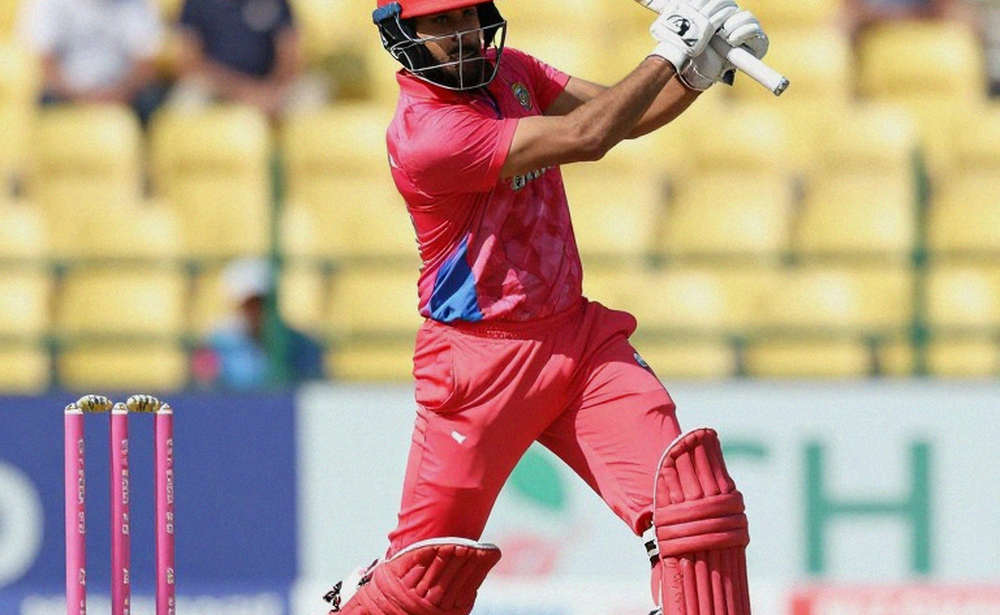
ग्लेन मैक्सवेल ने 38 साल की उम्र में अंतरराष्ट्रीय टी20, प्रथम श्रेणी और लिस्ट-ए क्रिकेट से संन्यास की घोषणा की है; वनडे से वे पिछले साल जून में ही रिटायर हो चुके थे। उन्होंने 130 टी20 अंतरराष्ट्रीय मैचों में 2,897 रन बनाए और ऑस्ट्रेलिया की सर्वकालिक सूची में तीसरे स्थान पर हैं। उनके नाम पांच टी20 अंतरराष्ट्रीय शतक हैं — यह आंकड़ा रोहित शर्मा के अलावा दुनिया में केवल उन्हीं के पास है। उनका पहला शतक सलामी बल्लेबाज़ के तौर पर पल्लेकेले में 65 गेंदों पर नाबाद 145 रन था, जबकि बाकी चारों शतक चौथे नंबर पर 2018 से 2024 के बीच बने। वे क्रिकेट से पूरी तरह नहीं हटे हैं — मेलबर्न स्टार्स के साथ उनका बिग बैश अनुबंध 2027-28 सीज़न के अंत तक चलेगा और 18 दिसंबर को MCG पर एडिलेड के खिलाफ स्टार्स के शुरुआती मैच में उनका खेलना लक्ष्य है। संन्यास का कारण घुटने का प्रबंधन और कार्यभार है, और उनके अनुसार टीम प्रबंधन का कोई दबाव नहीं था।
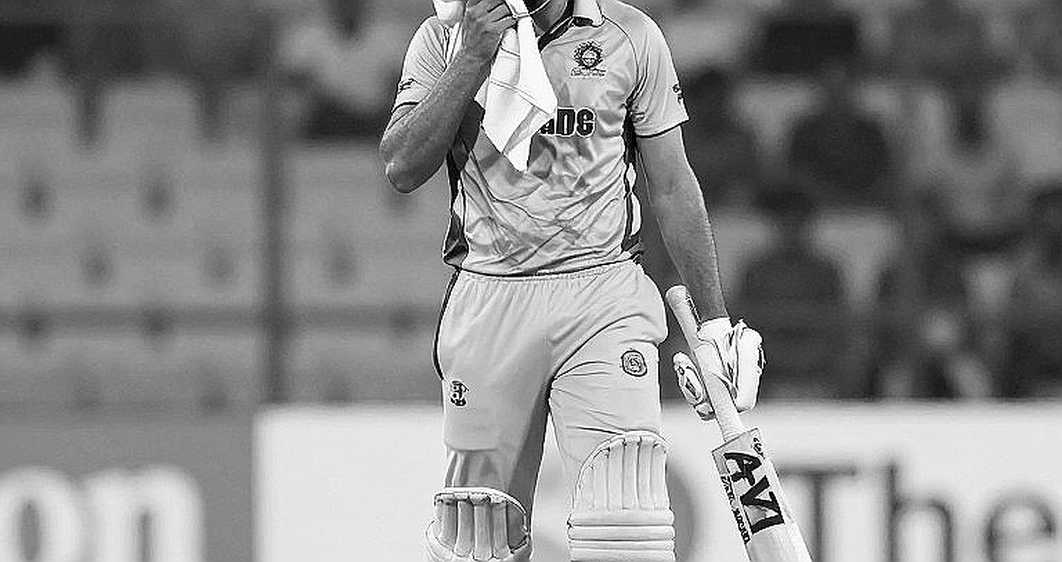
Australia's 360-degree hitter and part-time spinner Glenn Maxwell has announced his retirement from international T20 cricket at the age of 38, alongside his exit from first-class and List A cricket. According to his statement published on cricket.com.au, the official Cricket Australia digital platform, the decision is entirely the player's own and no pressure was applied by team management. He had already retired from ODI cricket last June, which means this was not a single sudden call but a process completed in three stages.
The correct way to read this news is as a career-closure event, not a performance event. No ball-by-ball or innings-level match analysis applies here because there is no match to analyse. What actually matters is succession planning, workload management and commercial transition. And of these three signals, the clearest and most interesting pattern is format-narrowing: progressively cutting back to the formats that carry the lowest physical load and the highest revenue.
Note that Maxwell has not retired from cricket itself. He has only given up the international formats and the long domestic formats. His Big Bash League contract with Melbourne Stars runs to the end of the 2027-28 season. That is the least discussed but most important fact in this story. A contract covering roughly four more seasons at 38 indicates the franchise values him not merely for on-field output but as a brand anchor and a box-office draw. For a player who has exited the format with the heaviest year-round calendar and retained the format with the most controlled schedule, this is a coherent risk transfer.
On the numbers, Maxwell scored 2,897 runs in 130 T20 internationals, third on Australia's all-time list behind only David Warner and Aaron Finch. That span lasted 13 years, a longevity benchmark in itself. But the real headline is not the run tally, it is century density. Five T20 international centuries in 130 matches places him in a two-man global category, the other name being Rohit Sharma. In a format where a century is a low-probability event, this is the strongest single piece of evidence of his T20 ceiling.
The distribution of those five centuries tells its own story. He made the first as an opener — 145 not out off 65 balls against Sri Lanka at Pallekele, including nine sixes, a strike rate of roughly 223. But the next four all came at No. 4 — two in Australia and two in India, between 2026 and 2026. This role migration is the most analytically useful fact in the entire story. It means Australia progressively used him not as a powerplay accumulator but as a middle-order enforcer and finisher against spin in the middle overs.
That distinction matters because a No. 4 batter faces a higher proportion of spin and more boundary riders. Comparing his strike rate directly with openers is therefore technically invalid. Unfortunately the available material provides no strike rate, no bowling economy rate, no home-away split and no pace-versus-spin split. The direct consequence is that his all-round value cannot be quantitatively assessed from this report — the word allrounder in the statement is qualitative, not statistical.
The age position is unambiguous. Thirty-eight, well beyond the normal 27-to-33 peak band for batters. The retirement decision is therefore consistent with expected physical decline rather than a narrative of sudden form collapse. And the concrete mechanism is present in the statement itself — Maxwell said clearly that he wants to invest more time in his body so he can get through the remaining couple of tournaments. Knee management is the binding constraint here, not motivation. The 50-over format places the heaviest fielding load on the lower limbs, which is plausibly one reason he gave up ODI cricket first.
As for first-class cricket, he has not played a single first-class match since 2026. That fact indicates red-ball cricket was never a defining part of his identity, and the retirement from it is effectively a formality. For Victoria's domestic programme this is a squad-planning consideration, but it is not a regulatory or compliance issue.
On the team landscape, the biggest point is that Australia had already begun the succession before the retirement was announced. Since the T20 World Cup, Australia played only three T20 internationals, all in Bangladesh, and used them to blood younger players who performed well. That was the de facto audition that made the timing of the retirement comfortable. Maxwell was the oldest player in Australia's most recent T20 World Cup squad, meaning he was the terminal node of the previous generation. His exit removes the last obvious x-factor designation from the Australian middle order.
It is also worth remembering that this retirement was not taken under duress. The statement contains no reference to the selectors, the captain or the head coach, which suggests Cricket Australia's formal reaction was still pending at the time of publication. That is normal sequencing, not evidence of tension. Maxwell himself said he would leave the door open, but in professional sporting language that phrase usually signals an unofficial soft retirement. A return is highly unlikely without an injury crisis or a conditions-specific selection call.
On the commercial side, the strongest data point is the contract term, not the fee. No figure has been disclosed, but a deal running to 2027-28 shows the franchise is taking a long-horizon bet. That is a low-risk position for the player in terms of income certainty. Equally, there is no No Objection Certificate dispute anywhere in this event, no board-versus-player friction and no eligibility question. From a governance standpoint it is the least problematic retirement pathway available.
There is no direct link between this story and the South Asian market. No information point mentions the IPL, the PSL or any India-related commercial connection, so any claim of an IPL ecosystem impact would be unsupported. It can be said, however, that four of his centuries came in India and two in Australia — which indicates his T20 output was not home-condition dependent. The four centuries at No. 4 between 2026 and 2026 also suggest his most productive T20 international window was roughly between the ages of 30 and 36, later than the general batting peak. That is natural for a power-hitter whose game depends less on raw reflex and more on experience against spin.
On risk, the dominant exposure is sporting, not financial or regulatory. Australia must replace a scarce function — a No. 4 who can hit both spin and pace with the same 360-degree range. That is not merely a run tally. The Bangladesh series gave prospective successors an opportunity, but the position will not be clear until six to twelve more T20 internationals. The second risk is Maxwell's knee, which could truncate even his Big Bash availability within the contract period. Availability reporting ahead of the Stars' opener against Adelaide at the Melbourne Cricket Ground on December 18 will be the most reliable signal on that front.
Even so, the overall risk rating is low. The retirement was player-initiated, procedurally clean, carries no integrity or governance question, and the succession had already been tested. To be candid, there is no indication of betting, spot-fixing or anti-corruption concern in this story at all, and any such inference would be baseless.
As a narrative, this belongs to a rare category — a positive retrospective fully backed by the fundamentals. His record includes three World Cups, and the 2026 T20 World Cup title is the one in which he hit the winning runs. For readers, it is also worth remembering that Maxwell's fielding — a whole catalogue of classic catches — was a part of his value that never appears in batting or bowling metrics.
The most underpriced element is not career quality but career horizon. The public is reading this as an ending; the data reads it as a format contraction with up to four more Big Bash seasons still to come. The signals to track going forward are therefore clear: Australia's No. 4 output, the knee status before December 18, the likelihood of a contract extension beyond 2027-28, Cricket Australia's formal statement, and any participation in a T20 league outside Australia. Those five signals will determine whether this retirement is the close of a chapter or the start of a new, narrower but longer one.
संबंधित खिलाड़ी
लोकप्रिय/पसंदीदा पुस्तकें
Conway's Concussion and New Zealand's Silence: A Team Weighing Its Depth Before India at Eden Park2026-11-04
Three Pages Missing: When the Cricket File Came Back Empty and Every Field Read N/A2026-11-04
Amir's British Passport and the Closed IPL Door: A Dramatic Rejection That Says More Than It Seems2026-11-03
Vaishnavi Sharma's 53-Place Jump Is a Story, but Not the Whole Story2026-11-03
Empty Data, Empty Conclusions: The Failure of 'Stage-1' in Cricket Analysis and the Lessons It Teaches2026-11-03
Maxwell Calls Time on T20Is and First-Class Cricket, Big Bash Ties Run to 2027-282026-11-03
Conway ruled out of first ODI against India after training collision with Henry as New Zealand's injury woes deepen2026-11-03
The Empty Stand Keeps Its Own Score: A Report From Cricket's Margins2026-11-03
अनुशंसित
Newlands' First Hour: This Decider Will Be Settled by Length, Not Pace2026-10-24
No Report From an Empty Stage-1: Case File on a Silent Failure2026-11-01
A ₹27 Crore Paddle and a ₹2.4 Lakh Match Fee: Who Signed the Bill for the Ranji Trophy's Decline2026-11-01
Cape Town will be decided by Nortje's groin and Rabada's workload, not by Bavuma's press conference2026-10-24
110 at Gaddafi: Madushanka's five wickets and the exposed map of Pakistan's batting2026-10-27
Namibia's 33 Points and Oman's Four Games in Hand: The World Cup Qualification 'Joke' Is the Table, Not the Headline2026-10-23
Amir's British Passport and the Closed IPL Door: A Dramatic Rejection That Says More Than It Seems2026-11-03
Could Test Cricket Really Come to Spain? The Answer Sits in the Governance Ledger, Not the Headline2026-11-04
अनुशंसित
The Auction Receipt: Retention Caps and Purse Arithmetic Are the Real Story Ahead of IPL 20262026-11-03
The Empty Stand Keeps Its Own Score: A Report From Cricket's Margins2026-11-03
The Test of Cricket Analysis: Format, Sample, and Escaping the Data Trap2026-11-02
N/A Does Not Mean Nil Risk: Auditing a Blank Cricket Data Receipt2026-10-24
Insufficient Input: A 3,983-Word Factual Sports Report Cannot Be Written Because Stage-1 Output Is Empty2026-11-02
The Empty Template of Cricket Coverage: When the System Never Read the Article2026-11-03
The Gqeberha Innings Win: Where the Pitch Wrote the Series, Not the Teams2026-10-23
Not the Century, the Over: The Ledger Behind Pakistan's Chase2026-10-26
अनुशंसित
Muscat’s slow pitch, two wicketkeepers and an incomplete story: India U19’s real test under Lakshya Raichandani2026-10-30
Conway ruled out of first ODI against India after training collision with Henry as New Zealand's injury crisis deepens2026-11-03
BCCI Extends IPL Retention Deadline: Two Days That Teach an Institutional Lesson2026-11-02
Maddinson's Catch Made the Headline; Bellerive's Day Belonged to a 153-Run Stand2026-10-30
The Four-Crore Slab: The IPL's Real Ledger Is Written on the Retention Sheet, Not on Auction Night2026-11-01
Insufficient Input: A 3,983-Word Factual Sports Report Cannot Be Written Because Stage-1 Output Is Empty2026-11-02
₹27 Crore Was Never a Market Price: The IPL Retention Slab, the RTM Clause and the Purse Sheet Nobody Reconciled2026-11-01
The Empty Bulletin: When an Injury Story Arrives Without a Name, a Source, or a Delivery Ledger2026-10-27
अनुशंसित
The Impact Player: A Twelve-Man Game Priced on an Eleven-Man Ledger2026-11-01
Thirteen WPL Matches, One Wicket: Jintimani Kalita's ODI Call-Up and the Real Ledger of India's Pace Depth2026-10-23
Hobart's Thirteen-Name Gamble: A Batter for a Spinner, and the Real Arithmetic of a Title Defence2026-10-29
Empty Data, Full Stories: The Null-Result Crisis in Cricket Journalism2026-11-01
The Real Test of Cricket Analysis: Right Format, Right Data, Right Questions2026-10-31
Conrad's 'Seat Belt' Doctrine: South Africa's WTC27 Plan Is a Squad Audit, Not a Championship Defence2026-11-03
A Neck Cushion, 28 Runs and Day Five: The Page of Smith's Fitness Protocol the Scorecard Never Records2026-10-30
Null Result: The Empty Sheet in Cricket's Data Pipeline and the Story It Told2026-10-30