
French Open 2026: Sindhu Grinds Past Akechi in 73 Minutes, Now An Se Young Stands in the Way
फ्रेंच ओपन 2026 महिला एकल सेमीफाइनल में पीवी सिंधु (भारत) ने हिना अकेची (जापान) को 21-10, 20-22, 21-16 से 73 मिनट में हराया। फाइनल में उनका सामना विश्व नंबर एक और मौजूदा विश्व चैंपियन अन से यंग (दक्षिण कोरिया) से होगा। सिंधु का अन से यंग के खिलाफ रिकॉर्ड 0-10 है; यह उनका 11वाँ मुकाबला होगा और जीत उनकी पहली होगी। 2026 सीज़न में सिंधु के यह दो फाइनल हैं, दोनों सुपर 750 स्तर पर; एक खिताब जापान ओपन (जुलाई) में। सेमीफाइनल का विश्लेषण: पहला गेम एकतरफा, दूसरे गेम में 17-16 की बढ़त से 20-22 की हार (क्लोज़-आउट विफलता), निर्णायक गेम में 15-16 से लगातार छह अंक। उपलब्ध नहीं: स्मैश स्पीड, रैली लंबाई, अनफोर्स्ड एरर, नेट-पॉइंट दर, तथा आमने-सामने के दस मुकाबलों के स्कोर। निष्कर्ष: यह शैली का मुकाबला है — पावर अटैक बनाम रिट्रीवल-एंड-कंट्रोल — और संरचनात्मक रूप से अन से यंग आगे हैं; सिंधु के लिए पहले तीन शॉट्स, बीच के गेम की स्थिरता, अंतिम अंकों का अनुशासन और रैली-नियंत्रण निर्णायक होंगे। 31 वर्ष की आयु और 73 मिनट के सेमीफाइनल के बाद लगभग 24 घंटे की रिकवरी एक वास्तविक जोखिम है।
Introduction: The Scoreline First, the Adjectives Later
PV Sindhu beat Japan's Hina Akechi 21-10, 20-22, 21-16 in the women's singles semifinal of the French Open 2026, booking a place in the final. The match lasted 73 minutes. The result is in Sindhu's favour, but the story the scoreline tells is not the story of a one-sided win. Game one was 21-10 — genuine dominance. Game two: Sindhu led 17-16 and lost it 20-22. Game three: she trailed 15-16, then took six straight points to close it at 21-16.
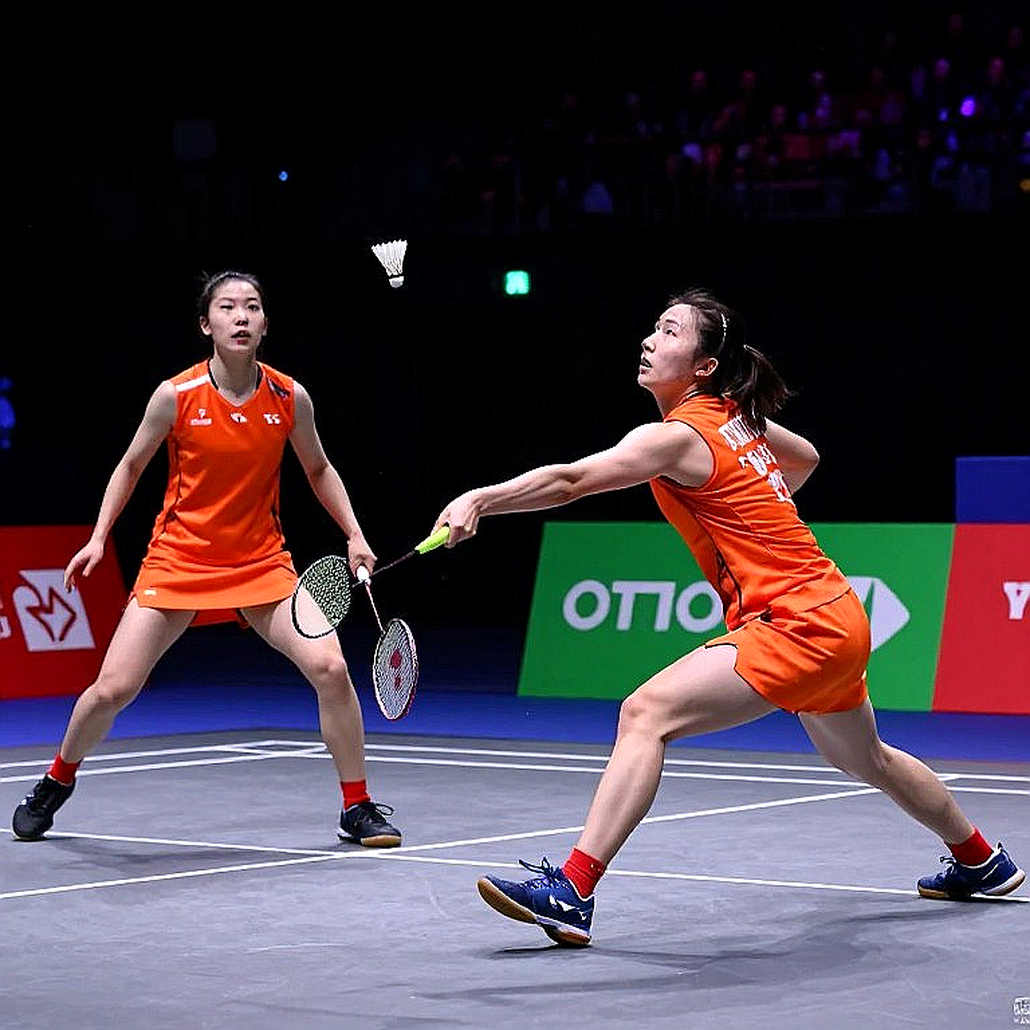
This report begins with that contradiction. Post-match framing used the word "outclasses" — implying a clinical demolition. But 73 minutes, three games, dropping a game 20-22, and trailing 15-16 in the decider do not fit the definition of a demolition. This was a survival win. Before Sunday's final, that distinction matters enormously, because the opponent waiting is the most error-resistant, hardest-to-beat player in the discipline right now.
Game One: The Only Stretch of Real Dominance
21-10 is a clean message. Sindhu did what the best version of her game does: kept rallies short, seized the first three shots, applied smash pressure from a high contact point, and kept her opponent pinned in a defensive posture. When a tall, long-lever attacker finds that rhythm, the score opens fast.

But this is one game's picture, not the match's. And that is the central analytical knot here: the player who won a game 21-10 slipped from 17-16 up in the next. The level of performance was volatile between games, not within them.
In technical terms this is in-match volatility — the costliest weakness at elite level, because any opponent will use the 11-point interval to change the terms of engagement.
Game Two: 17-16 to 20-22 — The Close-Out Problem
This is the most important passage of the match and the least covered.
Sindhu led 17-16 in game two. The game was under her control. She then conceded six of the last nine points and lost it 20-22. That is a close-out failure: the inability to shut down the closing points of a game you control. In badminton this is the most distinctive and most diagnosable metric there is. Smash speed, footwork and stamina are broadly stable; shot selection, risk calculus and decision quality at 18-18, 19-19 change instantly.
It matters because it is not a new problem — it is a known boundary of her style. An aggressive, short-rally model is built on risk: it wins fast and loses fast. When an opponent lengthens rallies and stops making errors at the death, the attacker is asked to win with patience. That is precisely the option that failed here.
Game Three: Six Straight Points from 15-16
Credit must be given, and it is real. Trailing 15-16 in a decider, after 73 minutes of three-game badminton, and then taking six consecutive points to 21-16 is a strong clutch indicator. Six straight points are rare at any level; in the final third of a decider they are close to exceptional.
But the caveat is honest: that run came against an opponent who is not world No. 1. Against the top seed, 15-16 becomes 18-18, 19-19 — the opponent fights for every point and extends rallies rather than conceding six in a row. And a single match is a sample of one: the run could be variance as much as pattern.
Technical Analysis: Sindhu's Archetype and a Changed Meta
Sindhu is a tall long-lever power attacker: high contact point, heavy smash, short rally construction. That model dominated women's singles from roughly 2026 to 2026, and it produced her two Olympic medals.
The top of the discipline has since shifted toward defence-to-counter, rally tolerance and error suppression — a game won by making fewer mistakes rather than hitting more smashes. That shift is a structural challenge for Sindhu, not a personal failing: she is the finest representative of a model the elite has moved past.
Not provided, and therefore not assessable: smash speed, average shots per rally, unforced error count, net-point win rate. Data pending verification.
Style Counter: Why An Se Young Is Structurally Ahead
The logic is simple. The power attacker wins by shortening rallies and dominating the first three shots. The retrieval-and-control player wins by extending rallies, taxing the taller player's lunge-and-recover cycle, and keeping the error rate near zero.
An Se Young is the supreme representative of the second category: world No. 1 and reigning world champion, with all-court coverage, extraordinary retrieval and disciplined error control. She stands on the structurally favourable side of this matchup.
That does not make Sindhu unable to win. It means winning requires sustaining the best version of her game for more than 60 minutes — and in the semifinal it did not hold past 40.
Head-to-Head: What 0-10 Actually Means
Sindhu's record against An Se Young is 0-10. Sunday's final is the 11th meeting; a win would be her first.
This is not merely a record. Ten straight losses against one opponent points to a structural, not incidental, matchup problem. If it were only form, some of the ten would have flipped. Zero out of ten means something in the matchup works every time. They have already met twice in 2026, and both results were negative — the most recent evidence is also adverse.
The largest data gap in this report: the scores of those ten defeats are unavailable. Whether they were blowouts or narrow defeats changes the conclusion materially. Without that, the mechanism cannot be assessed.
Form and Season: The Real 2026 Picture
Sindhu's 2026 is a genuine, measurable revival — but calibrated at Super 750, not Super 1000. Two finals this season, one converted into a title (Japan Open, July); the French Open is her second final. At 31, that is a strong season.
But both finals are at Super 750 level, and there is no Super 1000 final in 2026. That suggests she is converting consistently against the 8-20 ranked field but not yet against the top four.
An Se Young's picture is the mirror image: world No. 1, reigning world champion — the highest available quality markers. What is not stated, and could have been decisive, is the duration and schedule density of both semifinals.
Ranking, World Tour Finals and Olympic Quota
Reaching a second Super 750 final materially strengthens Sindhu's World Tour Finals (season top-eight) qualification position — the most concrete, measurable benefit of this semifinal win, regardless of the final's outcome.
Whether it lifts her into a protected top-eight seeding bracket cannot be assessed. Points-defence pressure cannot be assessed either. On Olympic quota: the 2026 season sits outside the LA 2028 qualification window, so there is no quota pressure and no immediate intra-team competition. Sindhu enters the final without that burden.
The Physical Dimension: Height's Double Edge, 73 Minutes and 24 Hours
Height and reach are Sindhu's biggest asset and her biggest cost. The asset: a high smash contact point, better reach on the backhand side, the ability to cover angled shots. The cost: higher energy expenditure per long rally, because long levers must lunge and recover every time.
Rally length is therefore the decisive invisible variable. If rallies stay short, her energy cost stays controlled and her weapons work. If they stretch, then age 31 and roughly 24 hours of recovery after a 73-minute semifinal become a concrete risk.
And here too there is a major absence: no rally-length or movement data is available, so it cannot be said that the physical cost will be decisive — only that it is a real, if unquantified, risk.
What We Do Not Know
Smash speed; average shots per rally; unforced error count; net-point win rate; Akechi's tactics (the article's silence implies no notable adjustment was observed); the scores of the ten head-to-head defeats; the duration of An Se Young's semifinal. Where data is missing, adjectives tend to fill the gap — this report resists that habit.
The Final's Roadmap
One: control the first three shots. Serve, return, third shot is where Sindhu can gain an edge; parity there means long rallies, which favour An Se Young.
Two: stop the mid-match dip. The semifinal's biggest danger was the looseness after 21-10. Drifting for an 11-point interval against An Se Young would be fatal.
Three: close-out discipline. At 17-16, the risk calculus must change — safest shot, no unnecessary risk, rally under control.
Four: manage backhand-side movement, the most expensive zone for a tall player.
Five: energy budgeting across three games, not spent in the first.
Risks and Warnings
Technical claims lack data support. Style is countered by a specific opponent's style. There is injury hazard in a high-consumption style at 31, 24 hours before a final. And the single-match sample is being over-generalised: "outclasses" and "error-free" do not survive contact with a 20-22 game loss and a 16-15 deficit in the decider.
One absent positive: the six-point closing run suggests her between-points routine and shot selection stabilised late. If that is repeatable rather than variance, it is a genuine asset for the final's endgame — but confidence must stay low on a sample of one.
Conclusion
The semifinal win is a win, and it should not be diminished. 73 minutes, three games, coming back from 15-16 in the decider — that shows mental resilience many players lack. A second Super 750 final of the season at 31, and a solid step toward World Tour Finals qualification, marks a successful season.
But the final is a different question, and the 21-10, 20-22, 21-16 match does not answer it. Its real substance is that Sindhu's ceiling is elite and her floor is not, and on Sunday she faces the player who has made stability her weapon. The 0-10 record is not coincidence; it is one result repeated ten times.
To break it, Sindhu must turn a 73-minute match's mistakes into a 55-minute match: an edge in the first three shots, stability in the middle, discipline at the death, and control of rally length. At least three of those four must land.
Whether they do is for the final to decide. One thing is already clear: this is not a contest of form but of style — and style's ledger currently does not favour Sindhu.