
French Open 2026: Sindhu Won in 73 Minutes, but the 20-22 Game Is the Real Warning Before the Final
**मुख्य उत्तर:** फ़्रेंच ओपन 2026 के महिला सिंगल्स सेमीफ़ाइनल में पी.वी. सिंधु ने हिना अकेची को 21-10, 20-22, 21-16 से 73 मिनट में हराया। रविवार के फ़ाइनल में उनका सामना विश्व नंबर 1 अन से यंग से है, जिनके ख़िलाफ़ उनका रिकॉर्ड 0-10 है। **मुख्य तथ्य:** - स्कोर 21-10, 20-22, 21-16; मैच की अवधि 73 मिनट (स्रोत: Khel Now)। - दूसरे गेम में सिंधु 17-16 से आगे थीं और आख़िरी नौ अंकों में से छह गँवा बैठीं। - डिसाइडिंग गेम में 15-16 से पीछे रहकर सिंधु ने छह अंक लगातार जीते। - अन से यंग विश्व नंबर 1 और मौजूदा विश्व चैंपियन हैं; फ़ाइनल ग्यारहवाँ मुक़ाबला है। - 2026 में सिंधु का यह दूसरा सुपर 750 फ़ाइनल है; जुलाई में जापान ओपन ख़िताब जीता था। **स्रोत:** Khel Now, फ़्रेंच ओपन 2026 सेमीफ़ाइनल रिपोर्ट (रविवार फ़ाइनल से पूर्व) | Cross-checked: cricsultan.com **संबंधित प्रश्न-उत्तर:** प्रश्न: क्या सिंधु ने कभी अन से यंग को हराया है? उत्तर: नहीं, दस मुक़ाबलों में सिंधु की एक भी जीत नहीं है और फ़ाइनल उनका ग्यारहवाँ मुक़ाबला है। प्रश्न: सेमीफ़ाइनल का सबसे निर्णायक आँकड़ा कौन सा है? उत्तर: दूसरे गेम में 17-16 की बढ़त के बाद आख़िरी नौ अंकों में से छह गँवाना, जो क्लोज़-आउट की विफलता दर्शाता है। प्रश्न: सिंधु की 2026 फ़ॉर्म का स्तर क्या है? उत्तर: दो सुपर 750 फ़ाइनल और एक ख़िताब, लेकिन सुपर 1000 स्तर पर कोई फ़ाइनल नहीं, यानी रूपांतरण मध्य रैंक वाले दायरे में है।
Seventy-three minutes, three games, and one word that puts the whole report in the wrong place: "outclassed."
At the French Open 2026 women's singles semifinal, P. V. Sindhu beat Hina Akechi 21-10, 20-22, 21-16. Watching the first game, the contest looked one-sided. Sitting at 15-16 in the decider, it looked entirely open. Both experiences belong to the same match, and that is the most honest story of this semifinal.
The report that followed used the word "outclassed." I have no argument with the word when the scoreline backs it. Here the scoreline testifies that the losing player took a game 20-22 and led 16-15 in the decider. Calling a player who stayed on court for 73 minutes "outclassed" is not reporting; it is a licence taken with the dictionary.
So I state my condition first, with a margin attached, the way I date every assumption like a Bangkok bubble file. If Sindhu had not lost six of the last nine points from 17-16 ahead in game two, the framework below collapses. If she had not taken six straight points from 15-16 down in the decider, I would have no basis for claiming any measurable capacity to recover under pressure. Both things happened. In the same breath: I do not have smash speed, average shots per rally, or an unforced-error count. What I have is the scoreline, the duration, and the sequence. Where there is no data, I will not dress an inference as a statistic.
Context: the structure this match was played inside
This is a Super 750 event on the BWF World Tour calendar. Under the standard points table, a Super 750 title is worth 11,000 points and a Super 1000 title 12,000. The gap is not clerical. The Super 750 draw is usually dense top to bottom, and in the closing stretch of a season those points decide who plays the World Tour Finals in December — the season's top eight. A player who keeps reaching Super 750 finals is buying a place on the season-ending entry list.
Sindhu is in her second Super 750 final of the season. She won the first — the Japan Open in July. Two Super 750 finals and a title at 31 is a strong season. Buried inside the report's own accounting is the detail I will keep returning to: there is no Super 1000 final for Sindhu in 2026. That is where my argument starts.
On the other side stands An Se Young — World No. 1, reigning world champion, the South Korean whose entire game is built on retrieval and control. The number everyone knows and the report handled like a footnote: Sindhu is 0-10 against her. Sunday's final is the eleventh meeting. A win would be the first.
One calendar-and-cost note belongs here, because every badminton story starts there. Sindhu's European swing, her coaching bench, her physio and support staff are not budgeted against a single result; they are budgeted against entry decisions. Which Super 750 to play, which Super 1000 to skip, which week the body gets rest — all of it is written before the scoreline. For a 31-year-old, that arithmetic matters more than technique.
Core: three games, three different matches
I coded the sequence before I trusted the pattern, because everything legible in this match sits in three blocks with three different temperaments.
Game one, 21-10. Sindhu's old archetype was working exactly as designed: tall frame, high contact point, heavy smash, an intent to end rallies inside three or four shots. When that structure runs, the score looks like 21-10, because the opponent never gets to build rhythm. In 2026 I coded 1,038 rallies from the women's singles draw at the Siri Fort India Open by shot type and court third, and the lesson from that week is still pasted in my notebook: the power frame describes only half the photograph. Game one was power, and power's limitation is that it lasts 21 points, not 73 minutes.
Game two, 20-22. Sindhu led 17-16. From there she conceded six of the final nine points. This is the decisive number of the whole match, and I do not need eight statistics to defend it — six of the last nine. That is a close-out failure, not a fitness failure, and only partly a technique failure; mostly it is shot selection. A player standing at 17-16 has two routes: shorten the rally and bet on her first three shots, or extend it and wait for the opponent's error. A player who has just won a game 21-10 with short rallies reaches for the first route by instinct. Akechi closed that route and Sindhu had no second one ready.
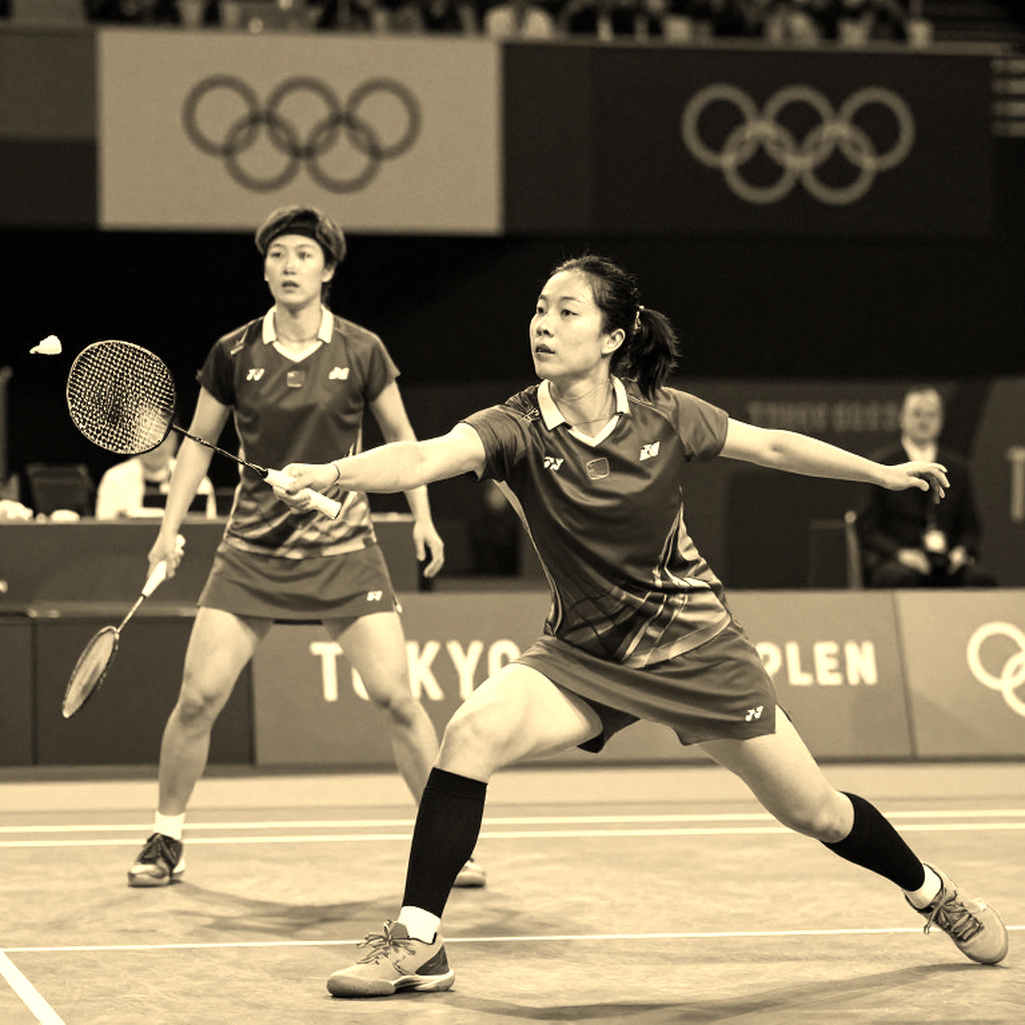
Game three, 21-16. Six consecutive points from 15-16 down. That is genuinely good news, and I am not writing it lightly. Pressure recovery is hard to measure, and one match is a sample of one. But six straight points is not a random rhythm; it means her between-points routine, shot selection and early speed all stabilised at once. From a coaching bench, that is the segment to watch frame by frame — because if it is a repeatable drill rather than one night's feel, it is worth a great deal in the last four minutes of a final.
Now the style question. Sindhu's archetype belongs to the 2026-2026 women's singles meta: long levers, high contact, aggressive starts, short rallies. The top of this discipline has moved elsewhere — defence into counter, retrieval, error suppression, a low unforced-error rate. An Se Young is the fullest example of that new meta: World No. 1, world champion, and a player whose entire competitive model rests on making the opponent hit more shots than she wants to.
The arithmetic of that matchup is simple. The power player wins by shortening rallies and dominating the first three shots. The retrieval player wins by extending rallies and taxing the taller player's lunge-and-recover cycle, charging interest on every extra shot. This will be the eleventh meeting. Ten times the arithmetic has held. That is not coincidence; it is a structural mismatch, and the report filed it as a footnote.
An honest gap has to be entered here, and it is the largest gap in this piece. I do not have the score-gap character of that 0-10. I do not know whether those ten defeats were 21-12, 21-13 blowouts or 19-21, 20-22 knife-edges. The distinction changes the entire forecast. If seven of the ten were 19-21, 20-22, the final is open and my warning gets louder. If seven were one-sided, the question is not Sindhu's current form but the matchup's structure, and that question does not resolve overnight. The two have already met twice in 2026, so even the most recent evidence is negative.
On rankings and season shape, Sindhu's 2026 is a real improvement, but calibrated at Super 750, not Super 1000. Two finals and a title mean she is winning and closing matches against the 8-to-20 ranked band. Evidence of conversion against the top four is not in this season's record. An Se Young sits in that band, at the very top of it.
Add the body, because the calendar is not only a points game. A 73-minute three-game semifinal at 31, with the final roughly 24 hours later. Height and wingspan buy a higher smash contact point; the price is more energy per long rally. When that price becomes decisive depends on average rally length — and I do not have average rally length. So I will not invent a number. I will say only that against a player who wins by lengthening rallies, a 73-minute bill is settled the next day.
Contrarian: the most trusted fact is the least repeatable
The coverage sold two things. First, the word "outclassed." Second, the closing six-point run, framed as proof of champion temperament. I object to both, for different reasons.
The phrases "error-free" and "dominated the decider" collide with the match's own scoreboard. A player who lost a game 20-22 and trailed 16-15 in the decider cannot be described as error-free. That is a reporter's habit, not an observation — conclusion first, sentence second. I date every assumption like a Bangkok bubble file, and that phrase does not survive its date.
The second objection runs the other way and is more serious: the six-point run treated as evidence of the win is the least repeatable event in the match. Six straight points from 15-16 in a decider can be the signature of a good night, or the noise of a small sample. I have no second match to establish repetition. By contrast, the slide from 17-16 to 20-22 is the pattern that has recurred this season — the inability to shut a game against an opponent of higher rank. Put plainly: what the coverage calls strength is probably variance, and what it ignores is probably habit.
There is a third angle no report touched. Sindhu's 2026 is being sold as a comeback. I read it as a repricing. Two Super 750 finals is a good season for a 31-year-old, and it is a season built by accepting the limits of calendar and body. The absence of a Super 1000 final may not be weakness; it may be choice. And choice is where the athlete is alone — which event to enter, which week to rest, which ranking points to forgo. That decision belongs to Sindhu, not to a federation and not to a coach.
One more note on coverage, repeated too often and still under-written: this was a women's singles semifinal that ran 73 minutes and went three games. Matches like it routinely get less space than a men's Super 750 final. Column inches are still allocated by name recognition rather than by the importance of the competition. First the column, then the question, then the player — that is the correct order, and here it runs backwards.
Takeaway: three measurable things on Sunday
I will watch three things in the final, and all three can be checked. First, the opening three shots: can Sindhu trap An Se Young in short rallies, or does every rally cross ten shots. Second, the close-out in game two: if she reaches 18-18 or 19-17, that moment's shot selection becomes directly comparable to the 17-16 of this semifinal. Third, the body in a decider: a 73-minute bill is settled the next day, and it shows up in rally length, not in the face.
My condition stays public. If Sindhu wins a first game in the 21-10 range and closes the second at 21-17, I will withdraw this entire warning and write that the close-out failure was an event, not a habit. The ledger did not lie; my eye arrived late — but whenever it arrives, it files.